
The Growing Carbon Challenge in Construction
Current Impact of Construction on Global Energy Consumption and Greenhouse Emissions
The construction industry significantly contributes to global carbon emissions and energy consumption. According to the International Energy Agency (IEA), operational energy use in buildings accounts for about 30% of global final energy consumption. When we consider the energy used to produce materials like cement, steel, and aluminium, this share rises to 34%. The building value chain is responsible for 37% of total carbon emissions globally. These figures highlight the urgent need for the construction industry to adopt sustainable practices and technologies to mitigate its environmental impact.
Need for Sustainable Building Technologies and Practices
Given the staggering carbon footprint of the construction sector, there is an urgent need to shift towards sustainable building technologies and practices. Traditional construction methods rely heavily on processes and materials that consume vast amounts of energy and produce significant greenhouse gas (GHG) emissions. For instance, buildings in the United States consume approximately 40% of produced energy and 74% of the electricity annually, most of which is generated from burning fossil fuels, resulting in considerable GHG emissions.
Role of Innovative Solutions in Reducing Construction Carbon Footprint
Innovative solutions are crucial for cutting the carbon footprint of the construction industry. The adoption of cutting-edge technologies such as 3D printing, Building Information Modelling (BIM), and advancements in sustainable materials can significantly lower emissions. For example, materials like cross-laminated timber and carbon-neutral biofuels can help decrease carbon footprints during both construction and operation phases of buildings.
3D printing, for instance, allows for precise material use, reducing waste and potentially lowering the need for traditional construction processes that are more resource-intensive. Additionally, integrating digital technologies like BIM facilitates better planning and resource management, leading to more efficient building operations and reduced emissions throughout a project’s lifecycle.

Understanding Ultimate Cell Technology
A Revolutionary Carbon Reduction Solution
The construction industry faces a profound challenge: reducing its significant carbon emissions. Enter the Ultimate Cell technology, a groundbreaking solution designed to cut harmful emissions and optimise fuel consumption. This technology is essential for internal combustion engines used in various sectors, including transportation, construction machinery, and industrial applications. By integrating hydrogen into the combustion process, Ultimate Cell dramatically reduces CO2 emissions and enhances fuel efficiency, all while improving overall engine performance.
Core Principles and Mechanisms of Ultimate Cell Technology
Ultimate Cell technology operates on the principle of hydrogen enrichment in the engine’s air intake. This process optimises fuel combustion, decreasing unburned hydrocarbons and reducing pollutants. Here are the core mechanisms:
Hydrogen Production: The Ultimate Cell system generates hydrogen on demand, responding to the engine’s load and speed. This ensures the right amount of hydrogen is produced for optimal engine performance.
Combustion Optimisation: By introducing hydrogen, the burning process becomes more effective, resulting in lower fuel consumption and reduced emissions of CO2 and other pollutants.
Engine Adaptation: The technology is versatile and can be adapted to various engine types, including those in cars, trucks, boats, and heavy machinery. This makes it a scalable solution for different industry needs.
Key Advantages Over Traditional Construction Methods
Ultimate Cell technology offers numerous benefits compared to conventional construction and fuel optimisation methods:
Significant Emission Reductions: Studies indicate that using Ultimate Cell can reduce CO2 emissions by up to 35% in certain applications, a remarkable improvement over traditional methods.
Enhanced Fuel Efficiency: The technology has been shown to lower fuel consumption by 18% to 38%, depending on engine type and condition. This not only reduces operating costs but also extends the lifespan of machinery.
Versatility and Scalability: Suitable for a broad range of applications, from small cars to large industrial machines, Ultimate Cell provides a flexible solution that can be tailored to meet specific needs across different sectors.
Improved Engine Performance: Introducing hydrogen into the combustion process results in quieter, smoother engine operation, with a modest increase in torque and improved overall efficiency.
Implementation of Green Building Standards
Overview of International Green Building Certification Systems
Green building certification systems, such as LEED (Leadership in Energy and Environmental Design), are essential for promoting sustainable construction practices. LEED, developed by the U.S. Green Building Council (USGBC), is the most popular and widely accepted green building rating system globally. It offers a framework for creating healthy, efficient, and cost-effective buildings that provide significant environmental and social benefits.
Other noteworthy certification systems include BREEAM (Building Research Establishment Environmental Assessment Method), which originated in the UK and is known for its rigorous assessment process, and Green Globes, which offers a versatile approach suitable for new constructions and existing buildings. Additional systems, including the Living Building Challenge and the National Green Building Standard, address various aspects of sustainability while focusing on both environmental and health impacts.
Regulatory Frameworks and Compliance Requirements
The adoption and enforcement of green building standards are guided by a mix of international regulations and local building codes. Among these, the International Green Construction Code (IgCC) provides a comprehensive framework for ensuring the sustainable design of new buildings and major renovations. The IgCC complements other systems like Green Globes and LEED, requiring adherence to various environmental benchmarks throughout a building’s lifecycle.
Gaining green building certification mandates compliance with specific protocols and performance metrics. Buildings seeking certification must go through several steps, including conducting building assessments, collecting detailed documentation, and implementing sustainable design measures. For example, ISO 50001, which supports LEED certification efforts, requires organizations to demonstrate a structured approach to improving energy performance and maintaining continual enhancements.
Case Studies of Successful Green Building Implementations
The David L. Lawrence Convention Center in Pittsburgh serves as an exemplary model of successful green building implementation, having achieved LEED Gold certification. This landmark highlights the potential of existing structures to transition towards more sustainable operations, substantially reducing energy consumption and emissions.
Another notable example is the Living Building Challenge-certified office building, which underscores the ability to refurbish even low-rise structures to meet the highest sustainability standards. This project emphasises innovation across various facets, from materials and water use to energy generation and social equity.
Economic Benefits of Carbon Reduction
Cost Savings Through Reduced Energy Consumption
Investing in green building practices results in substantial cost savings, primarily through reduced energy consumption. Traditional buildings demand higher energy use for heating, cooling, and operations, while more environmentally friendly designs significantly reduce these demands. Green buildings, leveraging various eco-friendly technologies, can achieve up to 30% reductions in energy use, translating to lower utility bills over the building’s life. Facilities constructed with LEED certification have reported nearly 20% lower maintenance costs than conventional buildings, reinforcing the economic sense of sustainable construction.
Moreover, water-efficient systems within green buildings further reduce consumption, contributing to overall savings. By integrating advanced designs for water conservation, green buildings can cut water usage significantly, leading to reduced operational expenses.
Return on Investment for Sustainable Construction Technologies
The initial investment in sustainable construction may be higher due to the premium on eco-friendly materials and energy-efficient systems. However, the long-term return on investment (ROI) generally outweighs these upfront costs. By reducing energy and water consumption, maintenance needs, and operational expenses, green buildings offer a robust financial return.
For instance, retrofitting existing buildings to meet green standards typically sees a reduction in operating costs of up to 10% within the first year alone. These long-term savings demonstrate a powerful financial incentive to adopt green building practices.
Long-Term Financial Benefits of Green Building Practices
The financial benefits of green building practices extend well beyond operational cost savings. Sustainable buildings often have a higher market value compared to traditional structures. Buildings that meet established green certifications, like LEED, BREEAM, or Green Globes, are attractive to investors and tenants alike, thus experiencing up to a 10% value premium.
Moreover, green buildings significantly benefit occupant health and productivity. Improved indoor air quality, natural lighting, and overall healthier environments contribute to increased employee productivity and reduced absenteeism. Although harder to quantify directly, these factors result in broader economic advantages for businesses operating within green buildings.
With significant energy savings, reduced operational costs, and increased market value, the long-term economic benefits make sustainable construction an attractive proposition. Furthermore, reduced environmental impact complements these economic gains, creating a compelling narrative for widespread adoption.
Government Initiatives and Policies
Role of Government Regulations in Promoting Sustainable Construction
Governments play a crucial role in driving sustainable construction through regulations and policies aimed at reducing carbon emissions. One prominent example is the UK’s Climate Change Act 2008 (2050 Target Amendment) Order 2019, which legally commits the government to achieving net-zero greenhouse gas emissions by 2050 compared to 1990 levels. This mandate pushes the construction industry towards sustainable practices and sets a clear target for carbon reduction.
Incentives and Support for Green Building Adoption
To encourage the adoption of green building practices, various financial incentives are available to industry stakeholders. In the U.S., the Inflation Reduction Act (IRA) expanded benefits for green building tax incentives, such as the 179D Energy-Efficient Commercial Building Tax Deduction. This deduction offers substantial financial rewards for implementing energy-saving technologies and designs, resulting in reduced operational costs and lower air pollution levels.
Additionally, the 45L Tax Credit, which provides up to $5,000 per unit for developers of energy-efficient homes, has been significantly expanded under the IRA. This credit aims to make sustainable residential construction more financially attractive, benefiting both developers and homeowners through reduced energy costs and improved sustainability.
Another key incentive is the Residential Clean Energy Credit, offering a 30% credit on the costs of qualified clean energy property installations for homes between 2022 and 2032. This credit promotes the integration of renewable energy solutions in residential buildings, further driving the shift towards green building practices.
Future Policy Directions for Carbon Reduction
Looking ahead, future policy directions are expected to focus on more stringent carbon reduction targets and broader implementation of sustainable practices across the construction industry. The EPA’s C-MORE program, for instance, supports the construction materials industry in reducing embodied carbon emissions through grants, technical assistance, and standardized reporting methods. This initiative ensures consistency and reliability in carbon reporting across the U.S., assisting manufacturers in lowering costs and accessing new markets.
Moreover, policies targeting a reduction in embodied carbon are gaining traction. By 2030, all new buildings and renovations aim to achieve at least a 40% reduction in embodied carbon, emphasising significant upfront carbon reduction efforts. Such measures will contribute to lower overall emissions and drive innovation in sustainable construction materials and techniques.
As governments continue to advance policies and incentives focused on sustainability, the construction industry is poised to become a pivotal player in the global effort to combat climate change. Effective regulations and support systems will foster the widespread adoption of green building practices, ultimately leading to significant carbon footprint reductions.
Innovative Materials and Technologies
Overview of Sustainable Construction Materials
Sustainable construction materials are crucial in reducing the carbon footprint of modern buildings. These materials, often derived from renewable resources, strive to minimise energy consumption and waste production throughout the building’s lifecycle. Notable innovations include bio-based composites, mycelium products, straw panels, and hemp solutions. These materials are particularly effective due to their low embodied energy, ability to sequester carbon, and potential for recycling.
Additionally, advancements in building materials such as cross-laminated timber (CLT) and energy-efficient concrete mixes incorporating fly ash or slag demonstrate the industry’s commitment to sustainability. These materials not only reduce carbon emissions but also enhance the thermal performance and durability of structures.
Integration of Ultimate Cell with Other Green Technologies
Integrating Ultimate Cell technology with other green solutions is a promising approach to achieving significant carbon reductions in construction. Ultimate Cell, which optimises fuel consumption and curbs harmful emissions, can be combined with innovations such as solar panels, energy-efficient windows, and smart grids. This synergy maximises energy efficiency and minimises overall environmental impact.
For instance, buildings using solar shingles and smart grids can benefit from the enhanced energy performance provided by Ultimate Cell, resulting in lower operational energy requirements and a reduced carbon footprint. This integration is pivotal for modern construction projects aiming to achieve net-zero energy buildings.
Emerging Trends in Eco-Friendly Construction Solutions
Emerging trends in eco-friendly construction reflect a growing commitment to environmental stewardship and innovation. Noteworthy trends include the rise of circular economy principles, focusing on waste reduction and material reuse. Zero-energy buildings, which consume only as much energy as they produce, are becoming increasingly popular. These structures often incorporate advanced energy management systems and sustainable building practices.
Other promising materials include bioplastics, which are derived from renewable biomass sources and can significantly reduce reliance on fossil fuels. These materials are gaining traction due to their lower environmental impact and alignment with circular economy goals. Additionally, the development of materials such as recycled steel and environmentally friendly concrete contributes to the sustainability of the construction industry.
Future of Sustainable Construction
Emerging Trends in Carbon Reduction Technologies
The future of sustainable construction is being shaped by cutting-edge technologies designed to significantly reduce carbon emissions. Advancements in artificial intelligence (AI) and automation are transforming the construction landscape. For instance, AI-driven systems can optimise energy usage, select sustainable building materials, and ensure projects comply with green certifications. AI technology also enhances predictive maintenance and resource management, which contributes to a reduction in overall carbon footprints.
Furthermore, the construction industry is seeing a rise in the use of renewable energy sources such as solar panels and wind turbines. Integrating these technologies into building designs helps create zero-energy buildings, which generate as much energy as they consume. This trend towards energy self-sufficiency is essential for achieving net-zero carbon emissions in the built environment.
Another noteworthy trend is the adoption of bio-based materials such as cross-laminated timber (CLT) and mycelium products. These materials not only provide excellent structural performance but also offer lower carbon footprints compared to traditional materials like concrete and steel.
Predicted Developments in Sustainable Building Practices
In light of these advancements, several developments in sustainable building practices are expected to take hold. One key development is the increasing prevalence of modular construction. This method involves constructing building components off-site and assembling them on-site, which reduces waste and improves efficiency.
Moreover, the integration of circular economy principles—where building materials are reused and recycled—will become more common. This approach minimises waste and reduces the demand for new resources, contributing to lower greenhouse gas emissions.
Green roofs and smart glass are also predicted to play significant roles in future buildings. Green roofs offer insulation and reduce the urban heat island effect, while smart glass can adjust its transparency to minimise heat gain and improve energy efficiency.
Role of Ultimate Cell in Shaping Future Construction Methods
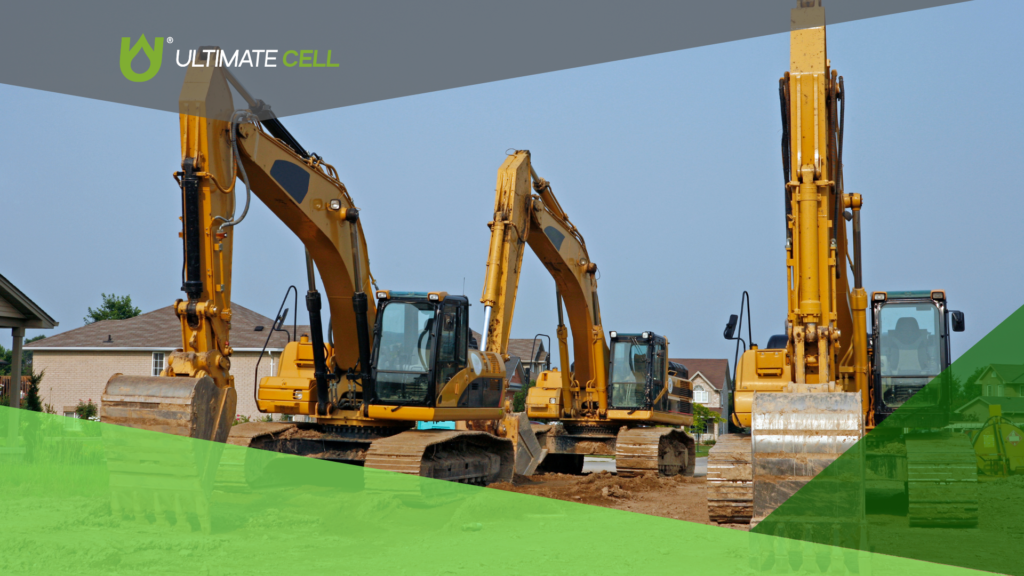
Ultimate Cell technology is positioned to significantly impact future construction methods by enhancing sustainability. As a hydrogen-based solution, Ultimate Cell optimises fuel consumption and lowers CO2 emissions, making it a critical component in reducing the carbon footprint of construction machinery and vehicles.
Moreover, Ultimate Cell’s adaptability to various engine types ensures that it can be widely implemented across the construction sector. By integrating Ultimate Cell with other green technologies such as solar panels and energy-efficient HVAC systems, the construction industry can move towards achieving its sustainability goals more effectively.
The potential of Ultimate Cell to improve engine performance and reduce fuel consumption aligns perfectly with the broader trend of creating environmentally friendly construction practices. As the technology continues to evolve, its role in shaping sustainable building methods will likely become more pronounced, paving the way for a greener built environment.